Samurai museum Tokyo vs Kyoto: choose Tokyo's Asakusa museum for the bigger, newer, more hands-on visit (four floors, sword lessons, from ¥3,000), and Kyoto's for a cheaper, smaller-group experience (from ¥1,500) inside Japan's historic samurai capital.
Key takeaways
- Both museums are run by Maikoya — Kyoto opened in 2015 near Nishiki Market, Tokyo opened December 2023 in Asakusa, purpose-built across four floors.
- Price gap: Kyoto entry from ¥1,500; Tokyo from ¥3,000 (full Tokyo pricing). Tokyo's extra yen buys scale and a deeper activity menu.
- Tokyo has the wider bookable range: a two-hour sword lesson (4.8★, 405 reviews), kid-specific ninja training, and a family sword lesson — 2,188 reviews across four tickets.
- Kyoto's edge is context and intimacy: smaller groups, and the streets outside are the history — Shinsengumi sites, the city where the samurai era actually ended in 1868.
- Don't confuse either with the famous old Shinjuku Samurai Museum — closed since January 2022. (Maikoya did open a third venue, a new Shinjuku branch with live sword shows, in December 2025.)
- Doing both cities? Pick one museum and spend the saved time at the Tokyo National Museum's armor gallery (¥1,000) for original pieces.
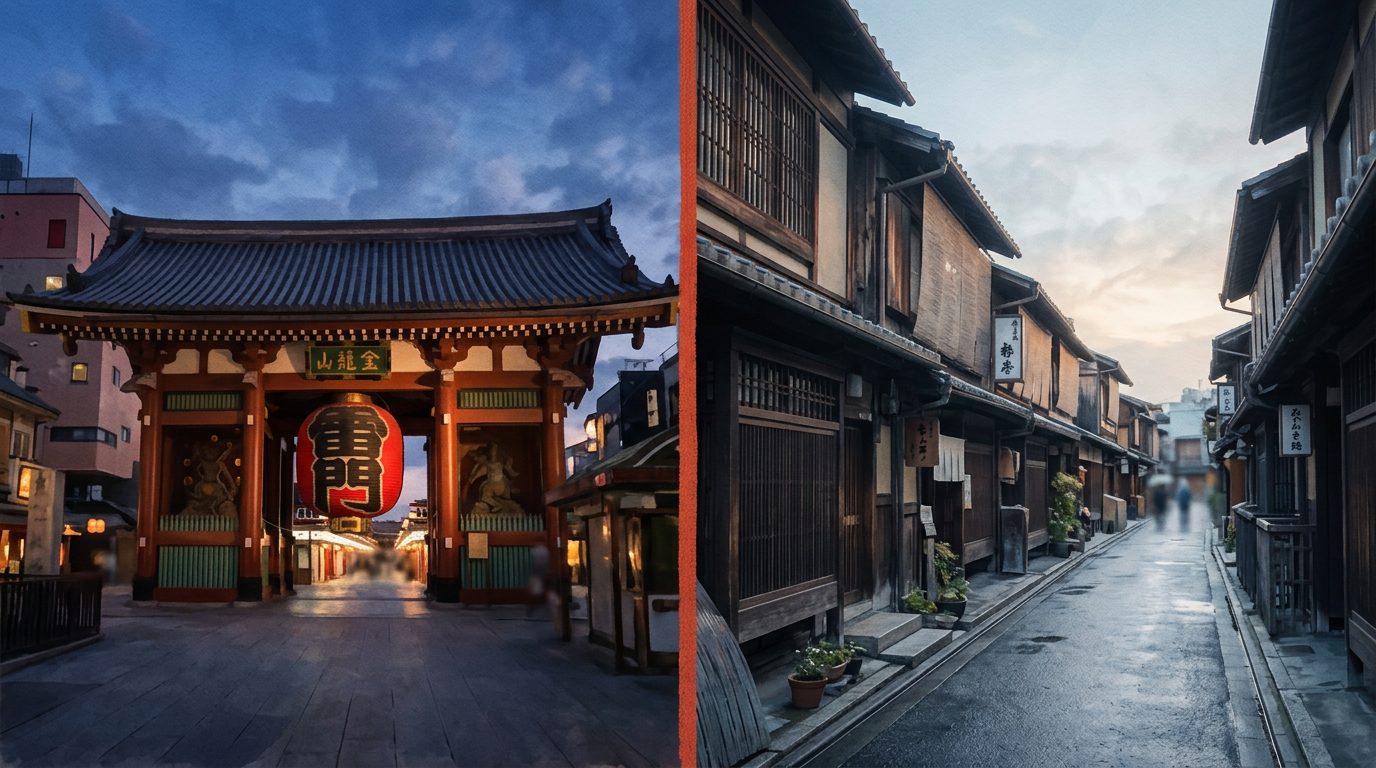
Feature by Feature
How do the Tokyo and Kyoto samurai ninja museums compare?
| Tokyo (Asakusa) | Kyoto (Nishiki) | |
|---|---|---|
| Opened | December 2023 — purpose-built | 2015 — the original |
| Size | Four floors | Smaller, single-venue format |
| Entry from | ¥3,000 (~$23) | ¥1,500 |
| Group feel | Busier; tours every 15 min, 9:00–19:00 | Smaller groups, more guide attention |
| Experience menu | Guided tour, sword lesson, kids' ninja training, family sword lesson | Tour, armor try-on, shuriken; compact upgrade list |
| Reviews (GYG) | 2,188 across 4 tickets, 4.6–4.9★ | Strong but smaller volume |
| Surroundings | Sensō-ji, Nakamise, modern Tokyo | Nishiki Market, machiya streets, samurai-era sites |
| Best for | Families, first Japan trip, activity-dense days | History-first travelers, smaller budgets |
When should you choose the Tokyo museum?
Choose Tokyo when the museum is the event rather than an appetizer. The Asakusa flagship is built for participation at scale: four floors, departures every 15 minutes, and the only location offering the full two-hour samurai sword lesson, the kid-friendly ninja training, and the parent-and-child sword class. With children, Tokyo isn't really a debate — the kids' programming exists only there, and it holds a 4.8 rating from the people hardest to please (parents of 8-year-olds).
Logistics also lean Tokyo for first-time visitors: you're almost certainly in Asakusa anyway for Sensō-ji, and the museum is two minutes from the temple — an easy 60–120 minute block in any itinerary. The four tickets are compared here.
When should you choose the Kyoto museum?
Choose Kyoto when context beats scale. The Kyoto branch is older, smaller and cheaper, and its guides work with smaller groups — reviewers consistently mention the personal attention. More importantly, the city around it does half the storytelling: Kyoto is where the Shinsengumi patrolled, where Tokugawa Ieyasu built Nijō Castle, and where the samurai era formally ended with the Meiji Restoration in 1868. An hour of orientation in the museum, then the streets themselves are the exhibition.
At ¥1,500 it's also simply the budget pick — half the Tokyo entry price for the shared core: armor try-on, shuriken, English-guided history.
What if you're visiting both cities?
Pick one museum — the core content overlaps enough that doing both feels repetitive within a single trip. Our default recommendation: do the hands-on visit in Tokyo (it's the stronger version of the interactive format), and in Kyoto spend that slot on the real-world sites. Then, back in Tokyo, give 90 minutes to the National Museum's arms-and-armor gallery in Ueno for original Edo-period pieces — the thing neither interactive museum can show you.
How we compared them
This comparison draws on the operator's published information for both venues (mai-ko.com), live pricing we verified in June 2026, and the review corpus for the Tokyo tickets (2,188 reviews). We earn a commission on Tokyo bookings made through our links — disclosure.
FAQ
Tokyo vs Kyoto — frequently asked questions
Is the samurai museum better in Tokyo or Kyoto?+
Are the Tokyo and Kyoto samurai ninja museums run by the same company?+
Is the Kyoto samurai museum cheaper than Tokyo?+
Do both museums offer sword lessons and armor try-on?+
Should I visit both samurai museums?+
Which museum is easier to fit into an itinerary?+

Decided on Tokyo?
Asakusa entry from $23, tours every 15 minutes, free cancellation up to 24 hours before.
Book the Asakusa Museum →